Blog
Protein on the Zone Diet: How Much You Need and Where to Get It
The ZoneIt Team
•
November 15, 2026
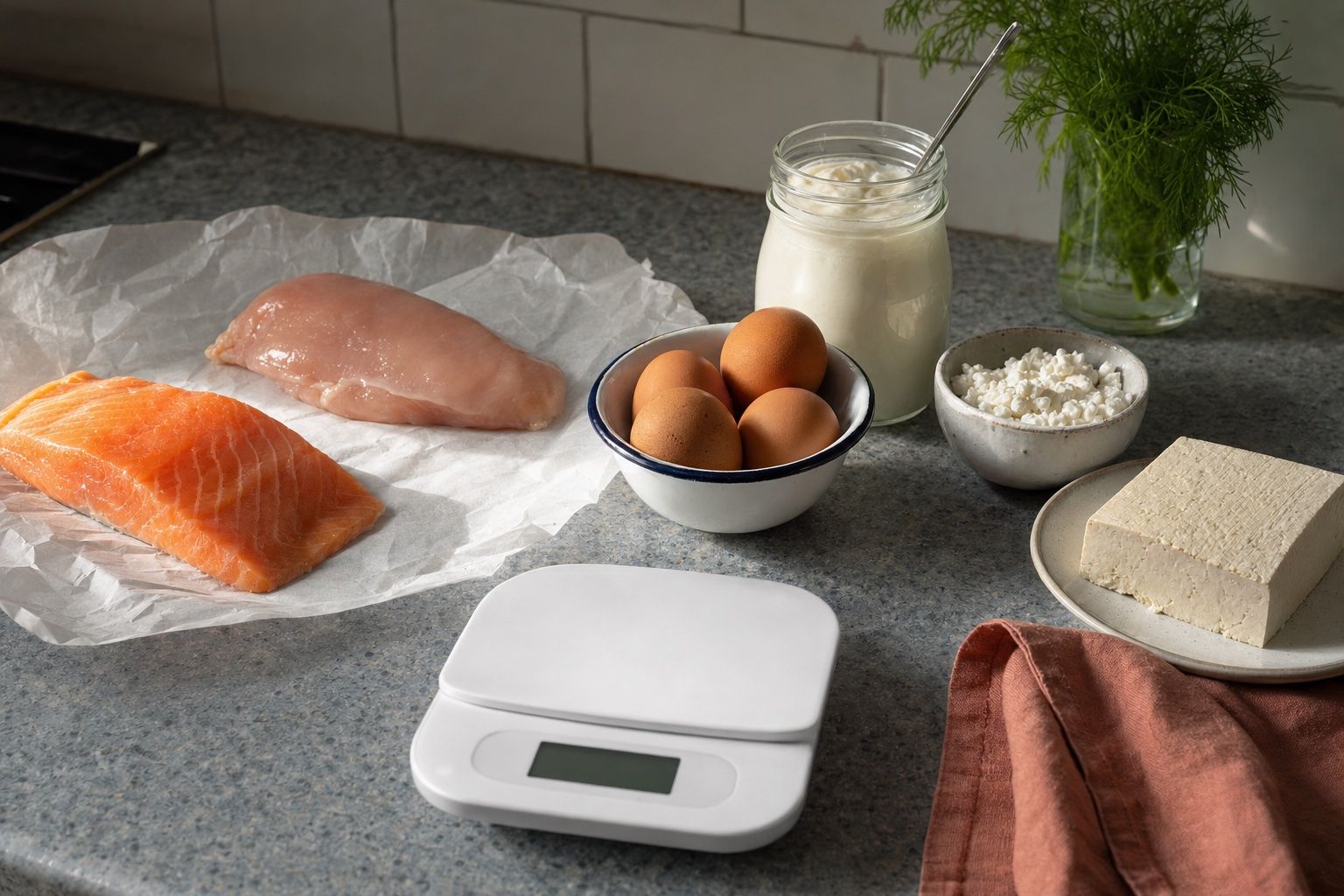
On the Zone, everything starts with protein. The number of protein blocks you need each day also sets how many carb and fat blocks you eat, because all three are equal. So it pays to know three things: how much protein you need, how to spread it through the day, and where to get it without piling on extra fat.
Why protein is the starting point
Protein is what your muscles are built from, and on the Zone it is also the yardstick for the whole meal. If your plate has 3 protein blocks, you add 3 carb blocks and 3 fat blocks to match. Protein keeps you full for a long time, which is why a meal without it often means hunger an hour or two later. We covered this in why you get hungry 2 hours after eating.
How much protein you need
Your need is calculated from your lean body mass (your weight minus fat) and how active you are. The grams of protein are divided by 7, because that is how much protein one block holds. The minimum is 11 blocks a day for women and 14 for men, which is about 77 g and 98 g of protein. How to get to your own number, with examples, is in our Zone diet calculator post.
Your goal doesn't change the math. On the Zone, your protein need is the same whether you want to lose weight or maintain it.
How to spread it through the day
On the Zone every meal is balanced on its own, so protein goes into every meal, not just dinner. That keeps you evenly full all day. An example with 11 blocks:
- breakfast: 3 blocks
- lunch: 3 blocks
- dinner: 3 blocks
- two snacks: 1 block each
With 14 blocks, meals become 4 blocks each and snacks stay at 1. If you skip breakfast and make up for it at night, the daily total still adds up, but you usually get hungry sooner and end up eating more carbs than you should.
What 1 protein block looks like
The amounts come from the ZoneIt food catalog, where every food has its own grams per block.
- Skinless chicken or turkey breast: 28 g (about 1 oz)
- Ground turkey: 35 g
- Beef or veal: 28 g (about 1 oz)
- Tuna, sea bream, shrimp: 28 g
- Salmon, mackerel, hake, carp: 42 g (about 1.5 oz)
- Eggs: 56 g, about one egg
- Egg whites: 64 g, about two whites
- Cottage cheese or farmer's cheese: 56 g
- Skyr: 65 g
- Low-fat strained (Greek-style) yogurt: 100 g
- 0.1% fat yogurt: 190 g
- Low-fat feta-style white cheese: 42 g
- Firm tofu: 70 g
- Protein powder: about 7–8 g
A 100–120 g (about 4 oz) portion of chicken is roughly 4 blocks, which covers all the protein for one main meal at 14 blocks a day.
Which sources to choose
Lean sources make it easiest: chicken and turkey breast, fish, egg whites and low-fat dairy. They give you protein with almost no fat, so you choose the fat in your meal yourself, such as olive oil, avocado or nuts.
Sausages, hot dogs, bacon, hard yellow cheese and full-fat cheeses also have protein, but they bring a lot of fat. That fat counts, so it quickly uses up the fat blocks for the meal. They aren't off-limits; it is just harder to stay balanced with them.
Oily fish is the exception. Salmon and mackerel have more fat, but it is the healthy omega-3 kind, so they fit the Zone well.
What about beans and lentils?
Lentils, chickpeas and beans have protein, but they have far more carbs. On the Zone they count mainly as carbs and can't cover your protein blocks on their own. If you don't eat meat, eggs, dairy, tofu and protein powder are the easiest options, with beans as a great carb source alongside them.
How to work it out from a label
Check how many grams of protein are in 100 g. Divide 700 by that number to get how many grams of the food make one block. For example, strained yogurt with 7 g of protein per 100 g: 700 ÷ 7 = 100 g per block. Skyr with 11 g of protein: 700 ÷ 11 ≈ 64 g. US labels list protein per serving, so convert to 100 g first or use the serving size in grams. The full method, with carbs and fats, is in how to calculate Zone blocks from a food label.
In ZoneIt you can search for a food or scan its barcode, and the app shows how many grams make one block, no math needed.
Can you eat too much protein?
The Zone doesn't follow "the more, the better". Protein above your blocks still has to be balanced with carbs and fats, so you simply eat more. That is why ZoneIt caps the daily total at 40 blocks. If you have kidney disease, are pregnant or breastfeeding, talk to your doctor before changing how much protein you eat.
In short
- Protein sets how many carb and fat blocks you eat.
- The minimum is 11 blocks (77 g of protein) for women and 14 blocks (98 g) for men; your exact number depends on lean body mass and activity.
- Spread it across all meals: 3–4 blocks per main meal and 1 block per snack.
- Choose lean sources and add the fat yourself.
- Beans and lentils count as carbs.
To see these amounts in full meals, take a look at the 7-day Zone diet meal plan and 5 Zone diet cottage cheese recipes.
Ready to get in the Zone?
Download ZoneIt for iOS and Android and get your own daily diary, recipes, and smart product search with barcode scanning, all in one place — free to download.


Includes in-app purchases.