Blog
How to Calculate Zone Blocks from a Food Label

The ZoneIt Team
•
October 16, 2026
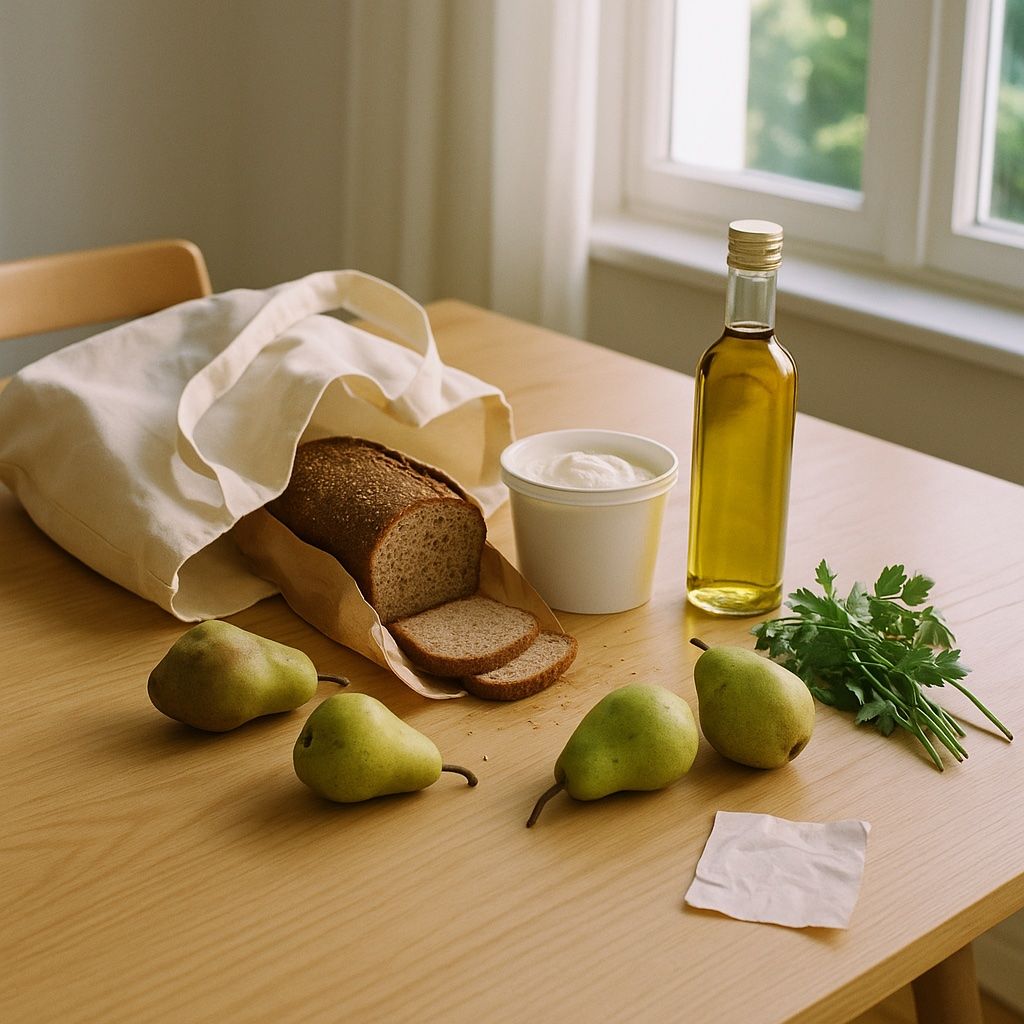
In a previous article, we explained what a block is and why the Zone counts blocks instead of calories. Now it's time to put that into practice: you pick up a product at the store, turn it over, and look at the nutrition label. How do you get from those numbers to how many grams make one block?
The three numbers you need
- 7 g protein is one protein block
- 9 g carbohydrates is one carb block
- 1.5 g added fat is one fat block
Why 1.5 g for fat and not 3 g? A full block contains about 3 g of fat in total, but roughly half of it comes along with the protein, from meat, eggs, or cheese. So the fat you add separately, like olive oil, nuts, or avocado, counts as 1.5 g per block. That's exactly how the label calculator in ZoneIt works too.
What about fiber?
This is where the label you're holding matters. On a US Nutrition Facts label, Total Carbohydrate includes dietary fiber. Fiber doesn't count toward your carb blocks, so subtract the Dietary Fiber line from Total Carbohydrate and use what's left.
European and UK labels work differently. There, fiber is listed on its own line and is already excluded from the carbohydrate number. If you're reading an imported product with an EU or UK label, use the carbohydrates exactly as written and don't subtract anything. Subtract fiber once, and only on a US-style label.
The formula
To find how many grams of a product make one block, divide the reference amount on the label by the grams of the macronutrient, then multiply by 7, 9, or 1.5. On a US label, the reference amount is the serving size in grams (you'll find it in parentheses next to the serving size). On an EU or UK label, values are usually per 100 g, so the reference amount is 100.
- protein: serving size (g) ÷ grams of protein × 7
- carbohydrates: serving size (g) ÷ grams of usable carbs × 9
- fat: serving size (g) ÷ grams of fat × 1.5
The result is in grams of the product. That's the amount you measure out on your kitchen scale.
Example 1: protein
Say a container of skyr says: serving size 150 g, protein 17 g (sample values). 150 ÷ 17 × 7 ≈ 62, so about 62 g of skyr is one protein block. With an EU label listing 11 g protein per 100 g, it's the same idea: 100 ÷ 11 × 7 ≈ 64 g.
Example 2: carbohydrates
Here's a typical US label for whole-grain bread: serving size 1 slice (43 g), Total Carbohydrate 20 g, Dietary Fiber 3 g (sample values). First subtract the fiber: 20 − 3 = 17 g usable carbs. Then 43 ÷ 17 × 9 ≈ 23, so about 23 g of bread is one carb block. That's roughly half a slice, which is why it's worth weighing it at least once.
On an EU label, the same kind of bread might show 41 g carbohydrates and, separately, 7 g fiber per 100 g (sample values). The fiber is already out, so you calculate with 41 g: 100 ÷ 41 × 9 ≈ 22 g of bread per carb block.
Example 3: fat
Olive oil is almost pure fat. A US label typically lists a serving of 1 tbsp (14 g) with 14 g total fat. 14 ÷ 14 × 1.5 = 1.5, so 1.5 g of olive oil is one fat block. That's about a third of a teaspoon, a lot less than most people pour by eye.
When a product has more than one
Most foods contain all three macronutrients. In that case, run all three formulas and see which one gives the fewest grams. That's the product's main block. In the bread example, the carbs "fill up" first, so bread counts as a carb. The other two macronutrients come along as partial blocks and should be counted too, unless they're negligible.
Or let the app do the math
It's good to know how it works, but you don't have to calculate by hand every time you shop. ZoneIt has a Blocks by label calculator: enter the values from the label and you instantly see how many grams make one block. For a US label, enter the dietary fiber so it gets subtracted from the carbs. For an EU or UK label, leave the fiber field empty, because fiber is already excluded. And with the scanner, you just point your camera at the barcode and get the result in seconds.
Ready to get in the Zone?
Download ZoneIt for iOS and Android and get your own daily diary, recipes, and smart product search with barcode scanning, all in one place — free to download.


Includes in-app purchases.