Blog
What Is the Zone Diet, and Why Count Blocks Instead of Calories?

The ZoneIt Team
•
October 16, 2026
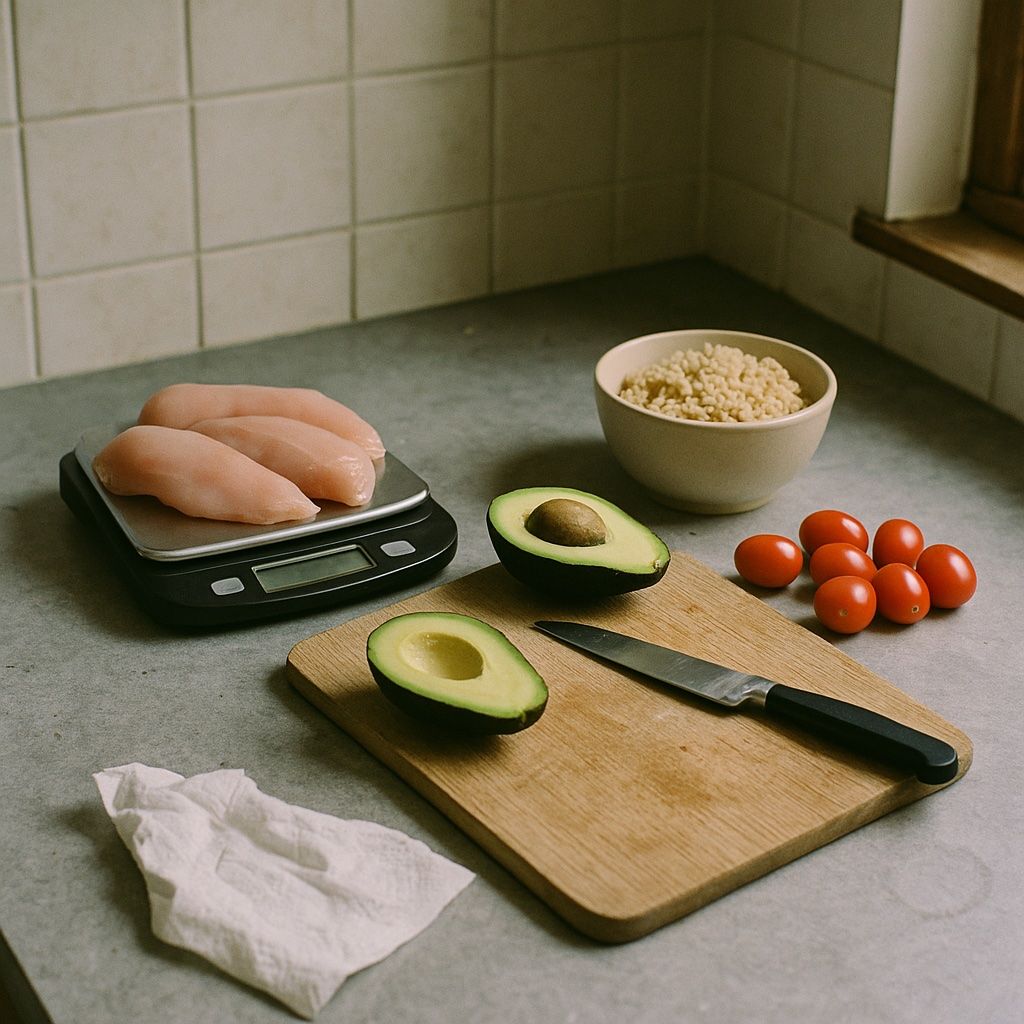
If you've heard of the Zone, you've probably heard the word "block." It's the thing that confuses most people at first. We're used to thinking about food in calories, and suddenly we're counting something else. In this article, we explain what the Zone actually is, what a block is, and why this way of counting is simpler than it looks.
What is the Zone?
The Zone is a nutrition approach created by Dr. Barry Sears and described in his 1995 book "The Zone." The core idea is that every meal combines protein, carbohydrates, and fat in a ratio of roughly 40% carbohydrates, 30% protein, and 30% fat by energy.
The Zone doesn't ban entire food groups. Instead, it balances them, in every main meal and in every snack in between. According to Sears, this balance is what helps keep blood sugar steadier and keeps you feeling full longer between meals.
What is a block?
The block is the Zone's unit of measure. One full block has three parts:
- 7 g protein: one protein block
- 9 g carbohydrates: one carb block
- 3 g fat: one fat block
A quick note on fat: 3 g is the total amount in one full block, but about half of it usually comes along with the protein, from meat, eggs, or cheese. That's why the fat you add separately, like olive oil, nuts, or avocado, counts as 1.5 g per block. You'll find more on this in the article how to calculate blocks from a food label.
The key is that you count the grams of the macronutrient itself, not the weight of the food. For example, about 30 g (roughly 1 oz) of chicken breast contains about 7 g of protein, which is one protein block. The same goes for carbs and fat: you look at how many grams of carbs or fat the food contains, not how much it weighs.
Why blocks and not calories?
Calories tell you how much energy you've taken in, but they say nothing about balance. You could eat 1,500 calories almost entirely from carbs and still be "on target." Blocks solve that problem: when every meal has an equal number of protein, carb, and fat blocks, the 40/30/30 ratio takes care of itself.
It's also easier math. Instead of adding up hundreds of calories, you count to three or four for each meal, for example 3 protein, 3 carb, and 3 fat blocks.
That doesn't mean calories disappear. One full block contains about 91 kcal, so your number of blocks per day also determines your energy intake. The balance is simply built into the unit itself.
How many blocks do you need per day?
Your daily blocks aren't based on your goal weight but on your protein needs. Those depend on your lean body mass (your weight minus body fat) and your activity level. The more muscle you have and the more active you are, the more blocks you need.
There's also a floor: 11 blocks a day for women and 14 for men. You don't go below that, even if the calculation comes out lower.
Blocks are usually spread across three main meals and one or two small snacks. For example:
- 11 blocks: 3 meals of 3 blocks and 2 snacks of 1 block
- 14 blocks: 3 meals of 4 blocks and 2 snacks of 1 block
How ZoneIt counts blocks for you
With ZoneIt, you don't have to calculate anything by hand. The app works out your daily blocks from your measurements and activity level. The calculator and the scanner turn the nutrition information on a label straight into blocks, and the recipes come with blocks already calculated.
All that's left is choosing what to eat. The balance has been worked out in advance.

Ready to get in the Zone?
Download ZoneIt for iOS and Android and get your own daily diary, recipes, and smart product search with barcode scanning, all in one place — free to download.


Includes in-app purchases.