Blog
Zone Grocery Shopping: Your List, the Aisles, and the Label at a Glance

The ZoneIt Team
•
October 16, 2026
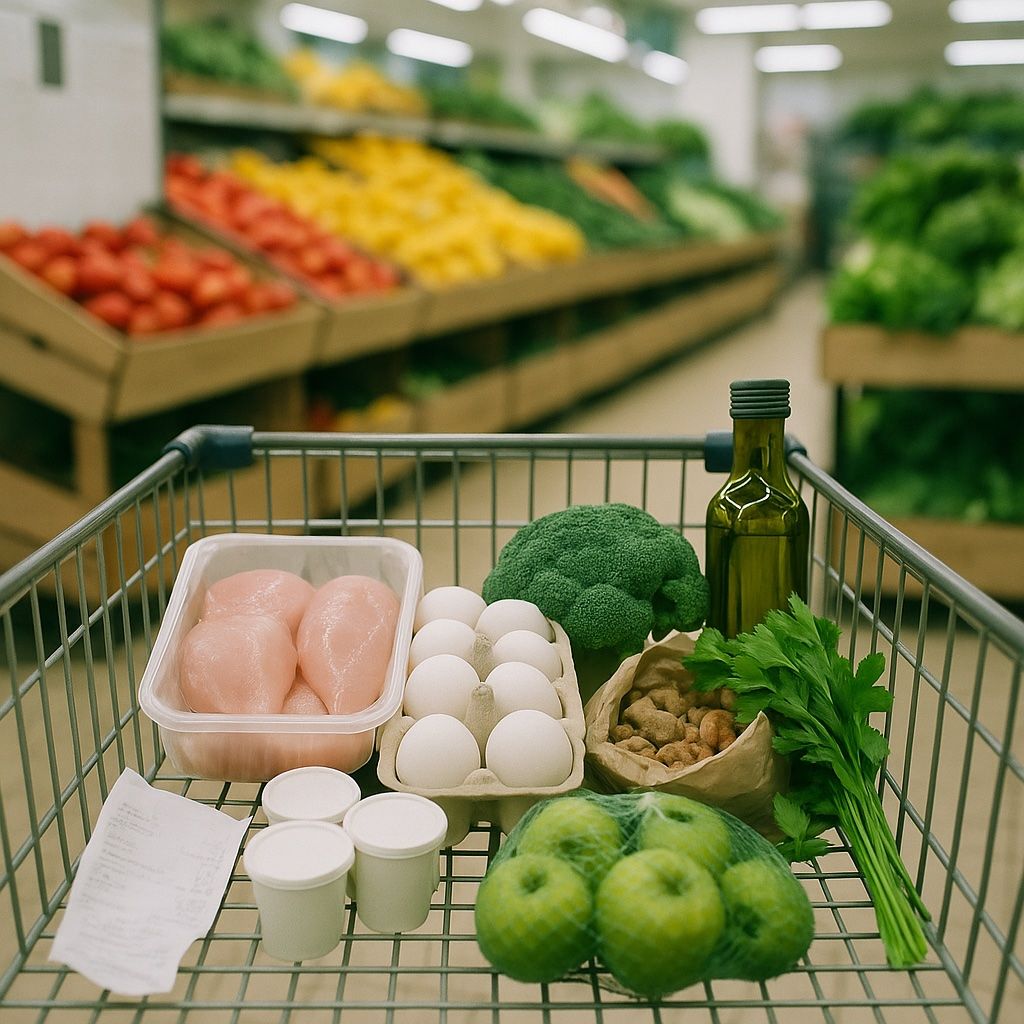
What you eat during the week gets decided at the store. If the right foods end up in your cart, there's nothing at home to tempt you, and cooking gets easier. We won't be counting blocks here; there's a separate article for that. This one is about shopping quickly and calmly.
Your core list
You don't have to build your list from scratch every time. Here are the foods worth always having at home:
- Protein: chicken and turkey breast, lean ground beef, fish, eggs, skyr, cottage cheese, plain yogurt.
- Carbs: vegetables (broccoli, zucchini, bell peppers, tomatoes, cucumbers, salad greens), fruit (apples, pears, berries, citrus), oats, lentils, and chickpeas.
- Fat: olive oil, avocado, raw almonds and walnuts, olives.
Check your list by meal, not by item. Every meal needs a protein, a carb, and a fat. If you've got protein for five dinners but nothing to go with it, your list isn't done yet.
Your route through the store
In most stores, the most useful foods are around the edges: produce, the meat and fish counter, and dairy. Start with produce, since that's where most of your cart gets filled. Then move on to meat and fish, and finish with dairy.
Go into the center aisles with a specific goal: olive oil, oats, nuts, tuna canned in water, canned chickpeas or tomatoes. If sweets, chips, and soda aren't on your list, just skip those aisles. And one more thing: don't shop hungry. Hunger is the surest way for something you didn't plan to end up in your cart.
The label at a glance
You don't need to do math in the store. Just check five things:
- Sugars. On a US label, look at Total Sugars and the Added Sugars line under it; on an EU or UK label, it's "of which sugars." If almost all the carbs are sugar and the product isn't fruit, it's closer to a dessert, even if it says "fitness" or "protein" on the front.
- The serving size. US labels list values per serving, and the serving is often smaller than what you actually eat. When you compare two products, compare them by the same weight, using the serving size in grams (EU and UK labels make this easy with a per 100 g column).
- "Light" and "fat-free." When the fat is taken out, the flavor is often made up for with sugar or starch. Compare the carbs with the regular version before you decide which is the better choice.
- Protein versus carbs. If you're buying a product for its protein, like skyr, yogurt, or cottage cheese, the protein should clearly be higher than the usable carbs. On a US label, that means Total Carbohydrate minus Dietary Fiber; on an EU or UK label, fiber is already excluded, so take the carbs as written. Fruit-flavored versions are often the other way around.
- The first ingredients. Ingredients are listed by quantity, from most to least. If sugar or a syrup (corn syrup, high-fructose corn syrup, glucose-fructose syrup) is among the first three, the product isn't an everyday food.
ZoneIt at the store
When you're torn between two products, point the ZoneIt scanner at the barcode and you'll see the blocks right away. If the product isn't found, enter the label values in the Blocks by label calculator. For a US label, include the dietary fiber so it's subtracted; for an EU or UK label, leave fiber empty. And if you often forget to shop in time, turn on the shopping reminder, one of the seven small habits that make the Zone easier.
A good week starts at the store
One core list, the same route every time, and five quick label checks. After two or three weeks, Zone shopping becomes automatic and takes less time than it used to.
Ready to get in the Zone?
Download ZoneIt for iOS and Android and get your own daily diary, recipes, and smart product search with barcode scanning, all in one place — free to download.


Includes in-app purchases.